

Deep beneath the windswept, frozen expanses of the Arctic circle, life has been waiting patiently for millennia. Long before the rise of modern civilization, before the construction of the Great Pyramids of Giza, and even before many of today’s modern ecosystems existed in their current form, microscopic organisms became trapped within dense layers of permafrost.
Locked away in permanently frozen ground, these tiny life forms remained suspended in time as centuries of ice, snow, and sediment slowly accumulated above them.Now, a series of groundbreaking scientific breakthroughs has achieved the unthinkable: researchers have revived these ancient microbes after thousands of years of profound dormancy.
This extraordinary feat offers a literal glimpse into Earth’s distant past. The findings are fundamentally changing our understanding of how life survives extreme conditions, how microorganisms adapt to rapid environmental shifts, and what hidden risks await us as climate change accelerates the thawing of Arctic permafrost.
What Are the Ancient Microbes Scientists Revived ?
The revived organisms are microorganisms expertly preserved within permafrost-ground that remains completely frozen for at least two consecutive years, though much of the Arctic permafrost has remained uninterrupted for tens of thousands of years.
Far from being completely dead zones, these icy vaults are teeming with historic biological data. Researchers from the University of Colorado, Boulder, detailed this phenomenon in a landmark study titled ‘Microbial Resuscitation and Growth Rates in Deep Permafrost: Lipid Stable Isotope Probing Results From the Permafrost Research Tunnel in Fox, Alaska’. By drilling deep into ancient frozen sediments, scientists have successfully recovered bacteria, archaea, and other microbial life across vast terrains in Siberia, Alaska, and northern Canada.
While some of these samples date back several thousand years, others are estimated to be over a millennium old. Despite spending an unimaginable stretch of time in a frozen state with virtually no access to direct sunlight, nutrients, or liquid water, many of these microbes retained a stunning ability: they became active, metabolized food, and began reproducing again the moment they were exposed to favorable laboratory conditions.
According to researchers, these organisms enter an advanced state of deep dormancy (often referred to as anhydrobiosis or cryptobiosis) that dramatically slows down biological activity to a near-halt, allowing them to survive environmental hostility that would easily kill almost any other form of life.
Also read : Did Neanderthals Have a Language ? New Research Could Change What We Know About Human Evolution
The Ultimate Natural Freezer: How Did the Frozen Microbes Survive For So Long ?
The secret to this multi-millennial survival lies in the unique structural properties of permafrost. Frozen soils act like nature’s perfect cryogenic vaults, beautifully preserving organic material, prehistoric DNA, and delicate cell structures.
Super-chilled temperatures slow down chemical reactions to an absolute crawl, drastically reducing cellular degradation. This environmental stasis lets specific microbes stay alive for unusually prolonged historical periods.
When scientists look deep into permafrost ecosystems, they discover that these surviving microorganisms possess highly specialized evolutionary tools:
- Ice-Binding Proteins: Microbes synthesize protective proteins that prevent lethal ice crystals from piercing and rupturing their cell walls.
- Desiccation Resistance: Cell membranes adapt to function with practically zero free-flowing liquid water.
- DNA Repair Mechanisms: Upon thawing, these organisms activate highly efficient internal metabolic systems designed to rapidly patch up DNA fragmentation caused by background radiation over thousands of years.
In another vital study titled ‘Bacterial community in ancient permafrost alluvium at the Mammoth Mountain (Eastern Siberia)’ conducted by the Russian Academy of Sciences, microorganisms found in ancient Siberian permafrost were cleanly brought back to life after being frozen solid for epochs.
As the researchers from the study noted, “Permafrost is a natural storage place for old microorganisms.” This makes it an incredibly valuable repository for mapping past environmental conditions and tracking evolutionary history.
The Dark Side of the Melt: Why the Discovery Matters as Arctic Permafrost Thaws
Reviving ancient microbes isn’t just a fascinating science tidbit to be filed away in textbooks. It has immediate, real-world implications for our global climate future.
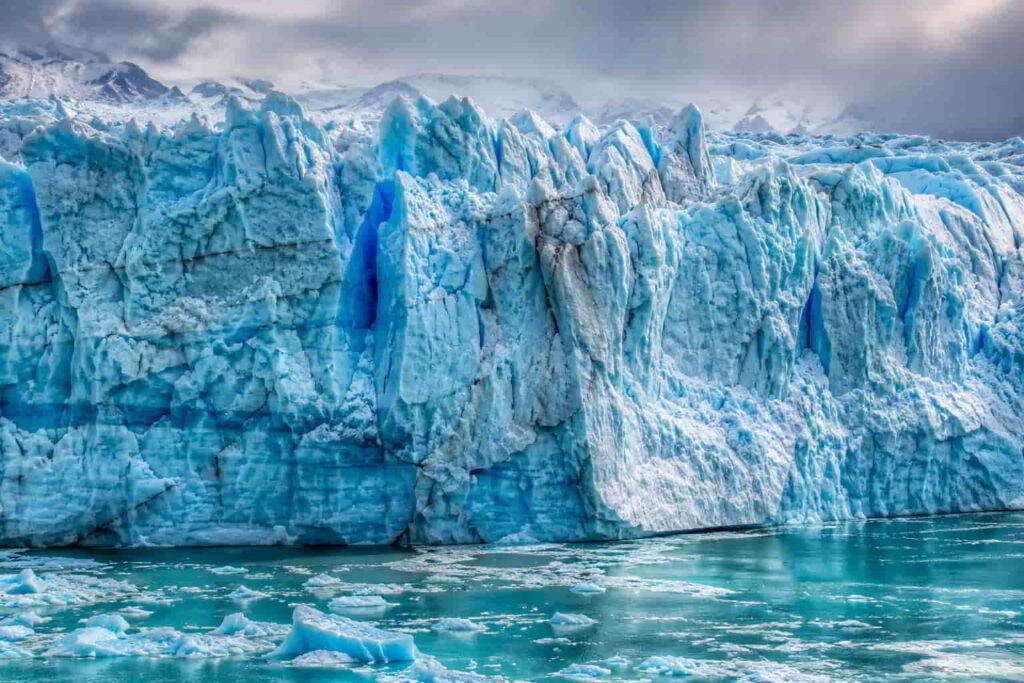
Arctic temperatures are currently climbing up to four times faster than the rest of the planet. This unprecedented warming is triggering a widespread, massive permafrost melt across the northern hemisphere. As the ice turns to mud, it exposes long-buried organic material and millions of tons of dormant microbes to the modern atmosphere.
Scientists are scrambling to understand how these ancient microbial communities will interact with our modern ecosystems. One of the primary concerns is the acceleration of the permafrost carbon feedback loop:
| Phase | Environmental Action | Climate Impact |
| Phase 1 | Rising global temperatures cause widespread Arctic permafrost thaw. | Exposes previously locked organic matter. |
| Phase 2 | Revived ancient microbes wake up and begin feeding on thawed carbon. | Speeds up the decomposition of organic matter. |
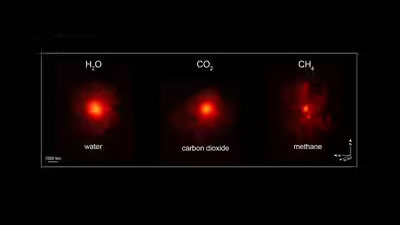
| Phase 3 | Microbial metabolism generates vast bypass gases. | Mass release of Carbon Dioxide ($CO_2$) and Methane ($CH_4$). |
| Phase 4 | Increased atmospheric greenhouse gases trap more heat. | Accelerates global warming, melting more permafrost. |
A Note on Public Health: Researchers stress that the vast majority of revived microbes studied so far are naturally occurring, benign environmental organisms rather than dangerous, prehistoric pathogens. While the Hollywood trope of a “zombie virus” wiping out humanity remains highly unlikely, understanding the behavior of these waking environmental microbes is critical to tracking global carbon emissions.
What These Ancient Organisms Reveal About Life on Earth—and Beyond
Beyond the immediate mechanics of climate science, this discovery offers profound insights into one of biology’s most fundamental questions: What are the absolute limits of life’s resilience ?
The fact that microscopic organisms can comfortably weather extreme cold, high pressure, and zero sustenance for thousands of years proves just how adaptable life truly is. This incredible genetic durability has massive potential applications closer to home, including:
- Advanced Cryopreservation: Improving how we preserve human tissues, organs, and medicines for extended periods.
- Biotechnology & Agriculture: Utilizing specialized cold-adapted enzymes (psychrophilic enzymes) for eco-friendly industrial processes and creating frost-resistant crops.
- Astrobiology: The hunt for extraterrestrial life.
If tiny organisms can live for millennia inside frozen dirt in the harsh environments of the Arctic, it changes the math for finding life on other planets. Similar life forms could be hanging out under the ice sheets of Mars, inside the subsurface oceans of Jupiter’s moon Europa, or on Saturn’s icy moon Enceladus.
Bringing back these microscopic organisms from their long sleep gives humanity a direct look into ancient worlds, preserving biological data from eras long gone. As our planet continues to warm at a rapid pace, exploring Earth’s frozen zones will remain a top priority for scientists racing to learn what secrets-and climate wildcards-the ice is still hiding.