


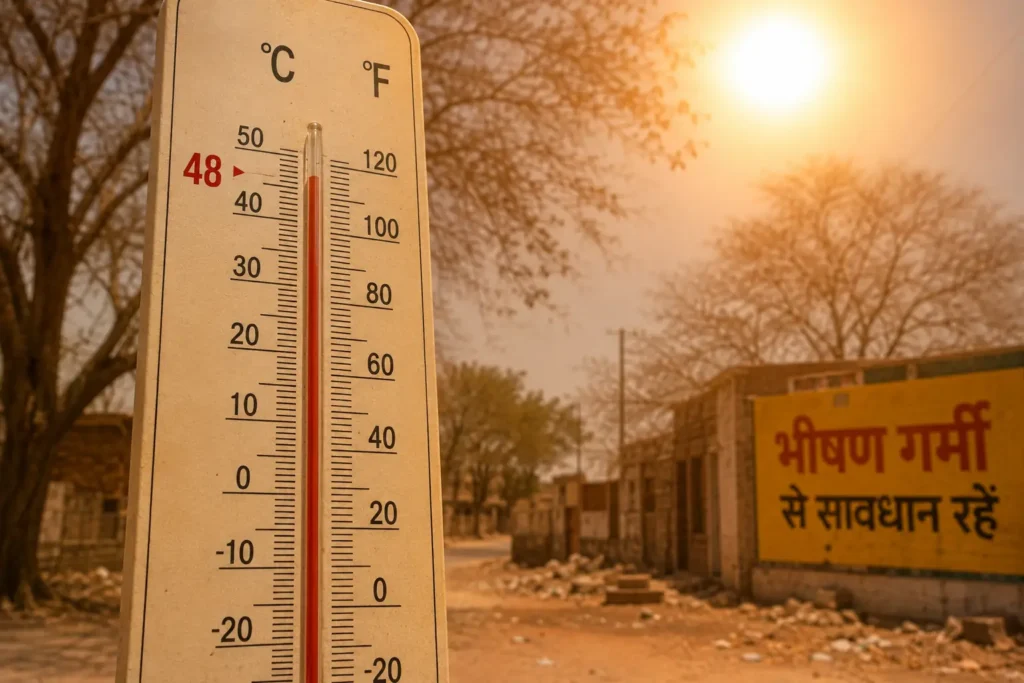
On May 22, 2026, something happened that most people hadn’t seen before. Every single spot in the world’s top 50 hottest cities list belonged to India. Not 10. Not 30. All 50. That number alone tells you this heatwave is different.
Banda in Uttar Pradesh recorded a blistering maximum of 48.2°C, making it the hottest city in the country this season. Meanwhile, Delhi recorded its warmest May night in nearly 14 years, with the minimum temperature at Safdarjung settling at 31.9°C – 5.2 degrees above normal. You read that right. The night-time low was nearly 32 degrees.
What’s actually happening on the ground
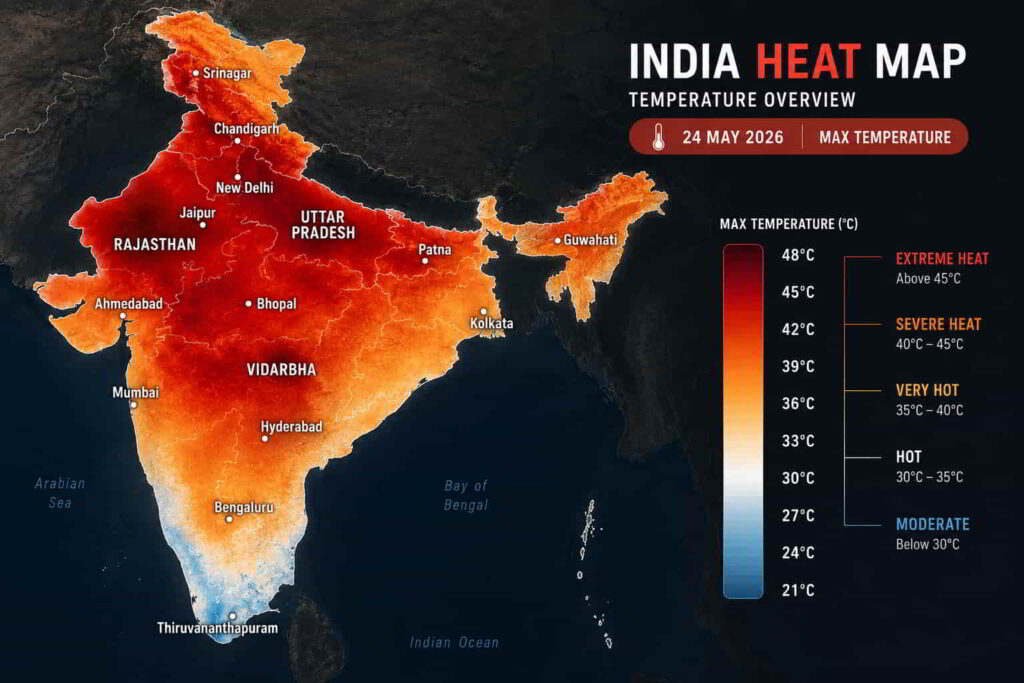
Cities across Uttar Pradesh, Odisha, Chhattisgarh, Bihar, Madhya Pradesh, Telangana, and Maharashtra have recorded temperatures above 40°C before noon. The Vidarbha region has been especially brutal, with some cities crossing 46°C.
Health systems have come under strain, particularly in Uttar Pradesh, where Lucknow reported a 30 to 40 per cent rise in heat-related illnesses, including heatstroke and sunstroke. Reports of deaths linked to extreme heat have also emerged from some regions. At least 37 heat-related deaths have been recorded in India so far this season, with outdoor activity as the predominant risk factor.
The IMD has issued alerts across most of the map. Heatwave advisories cover Delhi, Haryana, Punjab, Uttar Pradesh, Rajasthan, Madhya Pradesh, Vidarbha, Chhattisgarh, Bihar, Jharkhand, Odisha, Telangana, Himachal Pradesh, and Uttarakhand. That’s basically the entire country above the Deccan plateau.
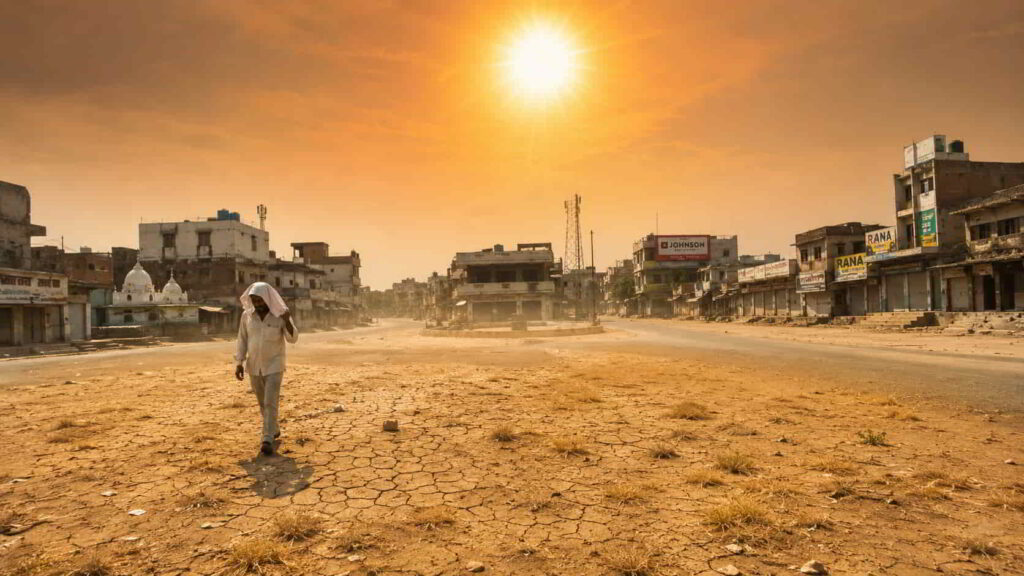
Why is 2026 so extreme ?
Four things are combining at once. This is not one bad summer. There are structural reasons temperatures are hitting these numbers.
1. Climate change has moved the baseline
Human-caused climate change made the 2026 heatwave both hotter and significantly more likely – approximately tripling its probability. The same event would have been about 1°C cooler in a pre-industrial climate. The dominant driver behind rising temperatures is human-induced global warming caused largely by fossil fuel emissions. Natural climate variability played only a secondary role.
Also Read : Will Indian Rupee Cross 100 Per Dollar ? Know the Risk to the Economy
India’s annual average temperature has been rising at 0.15°C per decade since 1951. The frequency of heatwaves in India increased by nearly 2.5 days between 1961 and 2021 and is projected to rise by 12 to 18 more days because of climate change.
2. Hot northwesterly winds with nowhere to go
In the absence of any weather system over the Indian mainland, hot northwesterly winds from the Sindh region of Pakistan and Rajasthan are penetrating deep into the country. The uninterrupted flow of these winds for days has been pushing the mercury into severe heatwave territory, according to Mahesh Palawat, Vice President for Meteorology and Climate Change at Skymet Weather. Think of it as a hot-air blast from a giant open desert, and nothing in the atmosphere is blocking it.
3. Delayed pre-monsoon rainfall
Large parts of north and central India have seen dry weather and below-normal pre-monsoon rainfall, allowing land surfaces to heat rapidly during the day. The lack of pre-monsoon activity has also contributed to unusually high night temperatures. When the days are hot and there are no pre-monsoon showers in the evening, these high temperatures are reflected in higher nighttime readings, Palawat explained.
4. The El Niño factor
Meteorologists are closely watching the possible development of an El Niño event in 2026. El Niño, a climate phenomenon linked to warmer Pacific Ocean temperatures, can disrupt global weather patterns. For India, El Niño years are typically associated with below-normal monsoon rainfall and amplified heat.
Climate models project that with an additional 1.3°C of global warming in the future, events like those seen in 2026 will become twice as likely and hotter by 1.2°C.
Cities on the frontline
Odisha’s Balangir hit 45°C as early as 10:50 AM IST. Chandrapur and Prayagraj were not far behind at 44°C. Cities across northern, central, and eastern India crossed the 42°C mark well before lunch. Night temperatures in many cities remained close to 30°C, offering little relief after sunset.
That’s the part people often miss. A night that doesn’t cool down means the body never fully recovers. Heatstroke risk compounds across days. Electricity demand surged to record levels due to increased cooling needs, and the grid is feeling it too.
Who’s most at risk
Kids, older adults, and outdoor workers have it hardest. Construction workers, delivery riders, farmers, street vendors – anyone whose livelihood requires being outside between 11 AM and 5 PM is in real danger. In high heat, the body uses sweating as a mechanism to cool itself. But under humid conditions, the air is already filled with moisture, so sweating becomes less effective and the body can’t dissipate heat properly. This consistent rise in body heat can lead to increased heart rate, high blood pressure, and organ failure in extreme cases.
What the IMD says next
The IMD has issued an orange alert for Delhi and adjoining NCR areas, warning that heatwave conditions are likely to continue till May 27, with maximum temperatures expected to touch 46°C.
Severe heatwave conditions are expected to persist across several states over the coming days. Eastern and western parts of Uttar Pradesh are expected to experience intense heatwave conditions during the same period, while severe heat alerts have been issued for parts of Rajasthan between May 25 and May 27.
Some relief is on the horizon, but not for everyone immediately. The IMD said conditions are becoming favorable for the further advancement of the southwest monsoon over the next three to four days, with progress expected into the southeast Arabian Sea, the Comorin region, and parts of the Bay of Bengal. Southern India gets relief first. The north has to wait.
Also Read this : Google I/O 2026: Gemini 3.5, AI Agents and Smart Glasses Steal the Spotlight
What you should actually do
Keep it simple. The basics work.
Stay inside between 11 AM and 4 PM. If you can’t, wear light-colored, loose cotton clothing and cover your head.
Drink water before you feel thirsty. Thirst is already a sign of mild dehydration. Aim for at least 3 liters daily during a heatwave.
Watch for these heatstroke signs in yourself and others: confusion, stopping sweating despite the heat, rapid pulse, hot dry skin. These are emergencies. Get to a cool place and call for help immediately.
ORS at home: Mix 1 liter of water, 6 teaspoons of sugar, and half a teaspoon of salt. Cheap, effective, and keeps electrolytes in check.
Never leave children or elderly people in parked vehicles. Car interiors can reach 60°C within minutes in this weather.
The 2026 heatwave exposed around 44 million people and $341 billion worth of economic activity to dangerous heat conditions across north and central India.
India has adapted to hot summers for thousands of years. The question is whether the adaptation – architecture, agriculture, infrastructure, public health – can keep pace with a rate of warming that’s faster than anything in recorded history. The monsoon will come. It always does. But the window before it arrives is getting deadlier every year.
“What used to be rare heat in South Asia is now a regular reality,” said Mariam Zachariah, a research associate in extreme weather and climate change at Imperial College London. She noted the pre-monsoon period in the region is becoming both longer and hotter, forcing hundreds of millions to face extreme conditions.
Researchers from World Weather Attribution put it plainly: climate change approximately tripled the probability of an event like the 2026 heatwave. The same event would have been about 1°C cooler in a preindustrial climate.