

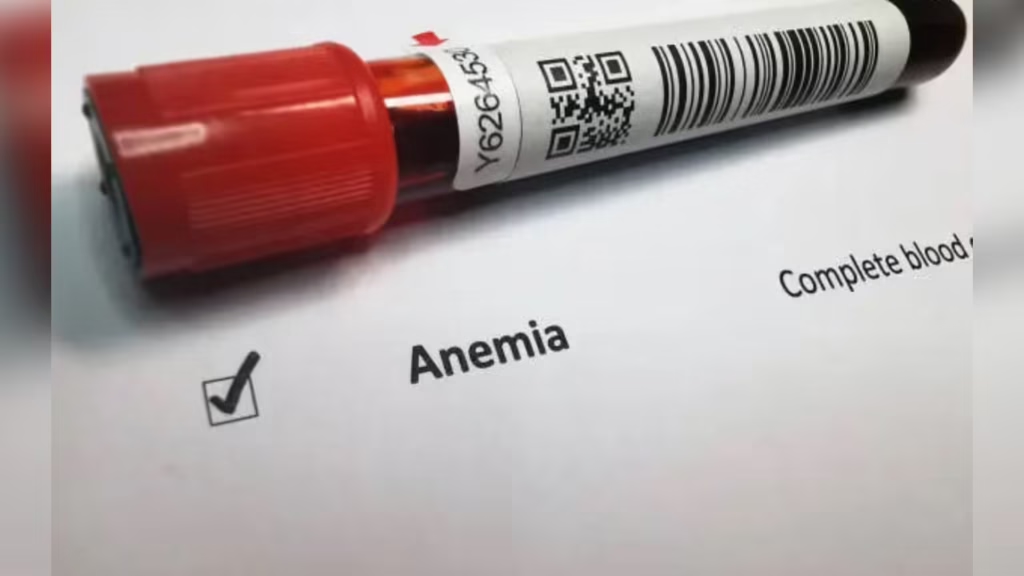
The recent rollout of the National Family Health Survey (NFHS-6) Fact Sheets has taken the public health sector by storm. While the data provides critical insights into the nation’s demographic and health metrics, public health experts quickly noticed a glaring omission: the complete absence of anaemia estimates.
As questions began mounting over whether crucial health data was being sidelined, the Union Health Ministry stepped forward to clear the air. Here is the real reason behind the missing data and how the government plans to track anaemia moving forward.
The Core Issue: Moving Away from “Finger-Prick” Tests
According to senior Health Ministry officials, dropping anaemia tracking from the NFHS-6 data was not an administrative oversight, but a deliberate scientific upgrade.
For years, previous rounds of the NFHS relied on the capillary blood sampling method-commonly known as the finger-prick test-to measure haemoglobin levels. However, experts have increasingly raised concerns over the accuracy and volatility of this method when conducting large-scale field surveys.
To fix this data discrepancy, the government is changing its entire approach:
- The New Blueprint: Instead of using NFHS data, future anaemia estimates will be pulled directly from the Indian Council of Medical Research’s (ICMR) specialized Diet and Biomarkers Survey (DABS).
- The Scientific Advantage: The ICMR survey utilizes venous blood samples (blood drawn directly from veins), which is globally recognized as the gold standard for flawless haemoglobin testing.
“Fact Sheets Are Just Phase One”
The ministry also firmly rejected allegations that key health and nutrition indicators are being systematically phased out. Currently, the released Fact Sheets map 101 core health, demographic, and nutrition measures, but this is just the tip of the iceberg.
“The Fact Sheets are merely the first stage of data dissemination. The comprehensive National Report, to be published at a later date, will provide a much broader picture, including extensive methodology details and deeper statistical analyses.” – Senior Health Ministry Official
Detailed findings regarding family planning success, specialized child health interventions, comprehensive women’s health indicators, and HIV tracking have all been safely reserved for the upcoming full-length National Report.
Also read : Did Neanderthals Have a Language ? New Research Could Change What We Know About Human Evolution
Streamlining Data Across Specialized Systems
Rather than overloading the NFHS framework with every single public metric, the government explained that several data points have been migrated to more specialized administrative systems and dedicated independent surveys:
- Sanitation & Cooking Fuel: Progress in clean cooking fuel coverage and household sanitation is now being mapped via dedicated independent surveys.
- Birth & Death Rates: Vital birth registration and national mortality data continue to flow seamlessly through established frameworks like the Sample Registration System (SRS) and the Civil Registration System (CRS).
What’s New in the NFHS-6?
While some legacy metrics have been relocated, the NFHS-6 has introduced several modern parameters to better reflect India’s shifting socioeconomic realities.
Key New Additions Include:
- Aging Population: Tracking the exact share and health status of the elderly population.
- Financial Inclusion: Measuring grassroots economic empowerment and bank account access across households.
- Maternal & Child Health: Enhanced tracking of antenatal care (ANC) utilization, expanded immunization coverage, severe diarrhoeal disease prevalence, and optimized breastfeeding metrics.
The Health Ministry reiterated that the National Family Health Survey remains India’s largest, most authoritative household health repository. The structural shift in how data like anaemia is captured is a step toward data precision, ensuring that future health policies are built on the most accurate medical evidence possible.
Source :TOI